



SQL or NoSQL? A Decision Framework for Modern Applications
Choosing the right database architecture is one of the most critical decisions in application development. Moreover, the debate between SQL and NoSQL databases has been ongoing for years, with each offering distinct advantages. Therefore, understanding when to use each type can significantly impact your application’s performance, scalability, and maintainability. In this comprehensive guide, we’ll explore the NoSQL vs SQL debate and provide you with a practical decision framework.
Understanding SQL Databases: The Relational Approach
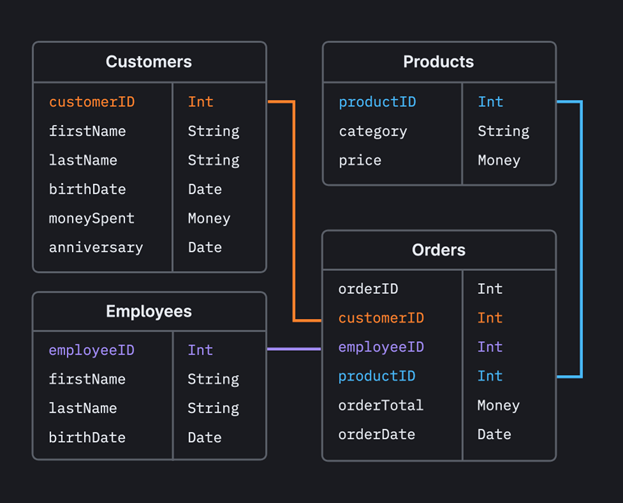
SQL (Structured Query Language) databases have been the backbone of enterprise applications for decades. Furthermore, these relational database management systems (RDBMS) organise data into structured tables with predefined schemas. Consequently, they excel at maintaining data integrity and handling complex relationships between different data entities.
Key Characteristics of SQL Databases
- Structured Data Organization: SQL databases store information in tables with rows and columns, where each column has a specific data type. Additionally, this structured approach ensures consistency and makes querying intuitive.
- ACID Compliance: SQL databases guarantee Atomicity, Consistency, Isolation, and Durability. Therefore, they are ideal for applications requiring strong data integrity, such as financial systems, payment processing, and enterprise resource planning (ERP) systems.
- Predefined Schema: Before storing data, you must define the database structure. However, this requirement ensures data quality and prevents inconsistent entries from polluting your database.
- Vertical Scalability: SQL databases typically scale vertically by upgrading hardware resources. Nevertheless, this approach has practical limits and can become expensive at scale.
Popular SQL Database Examples
Several mature SQL databases dominate the market, including:
- MySQL: Open-source and widely used for web applications
- PostgreSQL: Advanced features with strong standards compliance
- Oracle Database: Enterprise-grade with comprehensive features
- Microsoft SQL Server: Integrated with the Microsoft ecosystem
Understanding NoSQL Databases: The Non-Relational Alternative
In contrast, NoSQL (Not Only SQL) databases emerged to address the limitations of traditional relational databases. Specifically, they were designed to handle massive volumes of unstructured or semi-structured data. Moreover, NoSQL databases offer flexibility and horizontal scalability that SQL databases struggle to achieve.
Key Characteristics of Non-Relational Databases
Flexible Schema: NoSQL databases allow dynamic and adaptable data structures. Consequently, you can store different types of data without predefined schemas, making them ideal for rapidly evolving applications.
BASE Compliance: Instead of ACID, NoSQL databases follow BASE (Basically Available, Soft state, Eventually consistent). Thus, they prioritize availability and partition tolerance over immediate consistency.
Horizontal Scalability: NoSQL databases excel at distributing data across multiple servers. Therefore, they can handle massive amounts of data and high traffic volumes by simply adding more servers.
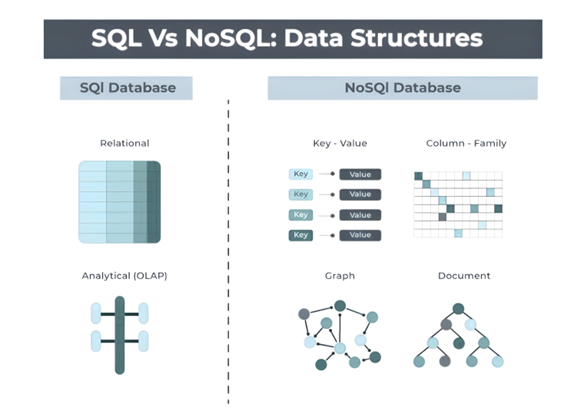
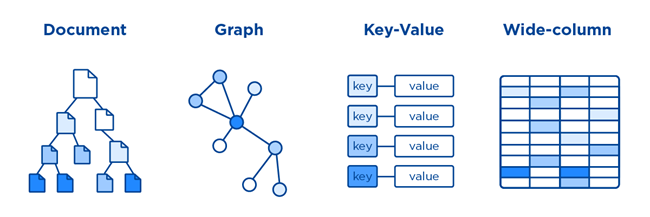
Diverse Data Models: Unlike SQL’s single table-based model, NoSQL offers multiple approaches including document-based, key-value pairs, column-family, and graph-based structures.
Types of NoSQL Databases
- Document Databases: Store data in JSON-like documents (e.g., MongoDB, CouchDB)
- Key-Value Stores: Simple pairs for fast lookups (e.g., Redis, DynamoDB)
- Column-Family Stores: Optimized for large-scale data (e.g., Cassandra, HBase)
- Graph Databases: Designed for relationship-heavy data (e.g., Neo4j, Amazon Neptune)
SQL vs NoSQL: A Comprehensive Comparison
Understanding the differences between relational and non-relational databases is crucial for making informed decisions. Therefore, let’s examine the key aspects where these database types diverge significantly.
|
Aspect |
SQL Databases |
NoSQL Databases |
|
Data Structure |
Structured tables with rows and columns |
Flexible formats: documents, key-value, wide-column, or graph |
|
Schema |
Fixed, predefined schema |
Dynamic or schema-less |
|
Scalability |
Vertical scaling (scale up with stronger hardware) |
Horizontal scaling (scale out across many servers) |
|
Data Integrity |
Strong ACID compliance (Atomicity, Consistency, Isolation, Durability) |
Often BASE model (Basically Available, Soft state, Eventually consistent) |
|
Query Language |
SQL (Structured Query Language) |
Database-specific (e.g., MongoDB Query Language, Cassandra CQL) |
|
Performance |
Excellent for complex queries and joins |
Optimized for high-volume, low-latency operations |
|
Use Cases |
Financial systems, ERP, CRM, traditional applications |
Big data, real-time analytics, IoT, social media, content management |
|
Examples |
MySQL, PostgreSQL, Oracle, SQL Server |
MongoDB, Cassandra, Redis, DynamoDB, CouchDB |
Data Structure and Schema Flexibility
SQL databases require a fixed schema defined upfront, which ensures data consistency but limits flexibility. In contrast, NoSQL databases support dynamic schemas that can evolve with your application. Consequently, if your application requirements change frequently or you’re dealing with varied data types, NoSQL provides significant advantages.
Scalability Approaches
When it comes to scaling, SQL and NoSQL take fundamentally different approaches. Furthermore, SQL databases scale vertically by adding more power to existing servers, which eventually hits physical and cost limitations. On the other hand, NoSQL databases scale horizontally by distributing data across multiple servers, offering virtually unlimited scalability.
Consistency vs Availability Trade-offs
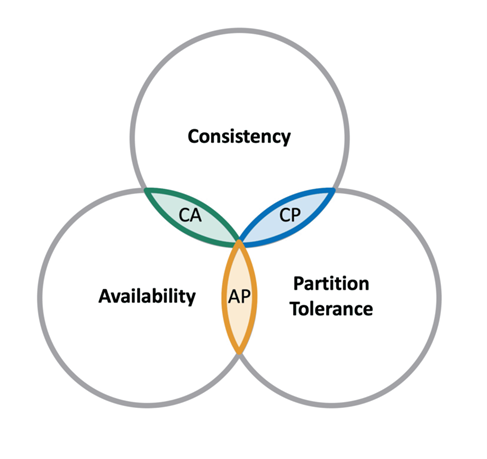
The CAP theorem states that distributed systems can only guarantee two of three properties: Consistency, Availability, and Partition tolerance. Therefore, SQL databases prioritize consistency and partition tolerance (CP), while most NoSQL databases favor availability and partition tolerance (AP). This fundamental difference impacts how you design your application architecture.
Decision Framework: When to Choose SQL or NoSQL
Selecting between SQL and NoSQL isn’t about which is “better” – rather, it’s about which fits your specific requirements. Moreover, many modern applications use both types (polyglot persistence) for different components. Let’s explore specific use cases to guide your decision.
Choose SQL Databases When:
- Strong ACID compliance is mandatory (financial transactions, payment systems)
- You need complex queries with multiple aggregations and filters
- Your schema is stable and unlikely to change frequently
- Data integrity is more critical than raw performance
- You’re building traditional business applications (ERP, CRM, accounting)
Ideal SQL Use Cases
- Fintech Applications: Payment processing, wallet management, and ledger systems require absolute transactional integrity. Moreover, the ability to roll back failed transactions is essential.
- E-commerce Platforms: Order management and inventory tracking benefit from SQL’s relational capabilities. Additionally, the consistency guarantees prevent overselling and maintain accurate stock levels.
- Enterprise Resource Planning: HR systems, supply chain management, and business intelligence tools leverage SQL’s powerful reporting capabilities.
Choose NoSQL Databases When
- Fintech Applications: Payment processing, wallet management, and ledger systems require absolute transactional integrity. Moreover, the ability to roll back failed transactions is essential.
- E-commerce Platforms: Order management and inventory tracking benefit from SQL’s relational capabilities. Additionally, the consistency guarantees prevent overselling and maintain accurate stock levels.
- Enterprise Resource Planning: HR systems, supply chain management, and business intelligence tools leverage SQL’s powerful reporting capabilities.
Ideal NoSQL Use Cases
Real-time Analytics: Clickstream data, IoT sensor readings, and user activity tracking generate enormous data volumes. Therefore, NoSQL’s write performance makes it ideal for these scenarios.
Content Management Systems: Product catalogs with varying attributes benefit from document databases. Furthermore, the flexible schema accommodates different product types without complex table structures.
Social Networks: Graph databases excel at representing and querying connections between users. Additionally, they can traverse relationships much faster than SQL joins.
Caching Layers: Key-value stores like Redis provide ultra-fast data access for frequently requested information, significantly improving application performance.
Performance Considerations: Relational vs Non-Relational
Performance isn’t just about raw speed – it encompasses throughput, latency, consistency, and scalability. Moreover, the “winner” depends heavily on your specific workload patterns and data access requirements.
SQL Database Performance
SQL databases excel at complex queries involving multiple tables and aggregations. Furthermore, their query optimizers can efficiently execute sophisticated analytical queries. However, write performance can become a bottleneck as data volumes grow, and scaling vertically has practical limits.
NoSQL Database Performance
NoSQL databases typically offer superior write throughput and can handle massive concurrent operations. Additionally, their distributed architecture provides excellent read scalability. Nevertheless, complex queries that would be simple in SQL often require application-level logic or denormalization strategies.
Hybrid Approaches: Polyglot Persistence
Modern applications increasingly adopt polyglot persistence – using multiple database types for different components. Consequently, you can leverage the strengths of both SQL and NoSQL databases. For example, you might use:
- PostgreSQL for transactional data and user accounts
- MongoDB for product catalogs and content management
- Redis for caching and session management
- Elasticsearch for full-text search capabilities
However, this approach introduces complexity in data synchronization and consistency management. Therefore, carefully evaluate whether the benefits outweigh the operational overhead.
Common Mistakes in Database Selection
Many development teams make critical errors when choosing between SQL and NoSQL. Therefore, being aware of these pitfalls can save significant time and resources.
Over-engineering with NoSQL
Some teams choose NoSQL because it’s perceived as “modern” or “scalable” without considering their actual requirements. However, if your application has structured data with complex relationships and doesn’t need massive scale, SQL is often the simpler and more reliable choice.
Underestimating SQL Scalability
Conversely, many assume SQL databases can’t scale. Nevertheless, modern SQL databases offer sharding, read replicas, and caching strategies that can handle substantial loads. Moreover, managed services like Amazon RDS and Google Cloud SQL provide automated scaling capabilities.
Ignoring Operational Complexity
NoSQL databases often require more specialized knowledge for proper configuration and tuning. Additionally, debugging consistency issues in distributed systems is significantly more complex than troubleshooting traditional SQL databases.
Understanding Database Schema Design
Database schema design is fundamental to both SQL and NoSQL systems, though approached differently. Furthermore, your schema decisions impact performance, maintainability, and scalability for years to come.
In SQL databases, schema design follows normalization principles to eliminate redundancy. Therefore, you create multiple related tables with foreign key relationships. Conversely, NoSQL databases often use denormalization, storing related data together to optimize read performance.
Database System Structure and Organization
The database system structure differs significantly between SQL and NoSQL. Moreover, understanding these architectural differences helps you leverage each system’s strengths effectively. SQL databases use a client-server model with strict transaction management, while NoSQL systems employ distributed architectures with eventual consistency.
Practical Implementation Considerations
Beyond theoretical understanding, successful database implementation requires attention to practical details. Therefore, consider these factors when building your application:
Development Team Expertise
Your team’s existing knowledge significantly impacts productivity. Furthermore, SQL’s ubiquity means most developers have experience with it. However, if your team has NoSQL expertise and your use case fits, that knowledge is valuable.
Ecosystem and Tooling
SQL databases benefit from decades of mature tooling, ORMs, and development frameworks. Additionally, database administration tools, monitoring solutions, and debugging utilities are well-established. Nevertheless, NoSQL ecosystems have matured significantly and offer excellent tooling for specific use cases.
Cost Considerations
Total cost of ownership includes licensing, infrastructure, and operational expenses. Moreover, cloud-managed database services simplify operations but can become expensive at scale. Therefore, carefully evaluate pricing models for your expected growth trajectory.
|
Scale |
SQL Databases |
NoSQL Databases |
|
Small Scale (single app, low traffic) |
Usually cheaper • Can run on one small server • Many free/open-source options • Minimal ops overhead |
Often slightly higher • Managed NoSQL has minimum costs • Overkill for simple apps |
|
Medium Scale (growing users, moderate traffic) |
Costs rise faster • Vertical scaling (bigger machines) • Replication/licensing adds cost |
More cost-efficient • Horizontal scaling on commodity servers • Pay-as-you-grow model works well |
|
Large Scale (millions of users, big data) |
Expensive • Very large servers required • Enterprise licenses • Complex sharding setups |
Usually cheaper overall • Designed for massive horizontal scaling • Uses many inexpensive nodesL |
|
Operational Costs |
Higher • Manual sharding • Complex HA setups • DBA-heavy |
Lower • Built-in sharding & replication • Managed services reduce admin |
|
Storage Costs |
Higher • Structured storage • Index-heavy |
Lower • Flexible schemas • Optimized for large datasets |
Future Trends: SQL vs NoSQL Database Evolution
The database landscape continues evolving, with both SQL and NoSQL systems adopting features from each other. Moreover, new distributed SQL databases combine ACID compliance with horizontal scalability. Consequently, the distinction between SQL and NoSQL is becoming less binary.
NewSQL databases like CockroachDB and Google Spanner offer SQL interfaces with NoSQL-like scalability. Additionally, many NoSQL databases now support SQL-like query languages. Therefore, focus on your requirements rather than strict categorisation.
Additional Resources and Learning
To deepen your understanding of NoSQL vs SQL databases, consider exploring these authoritative resources:
- MongoDB Documentation: https://docs.mongodb.com/
- PostgreSQL Official Guide: https://www.postgresql.org/docs/
- AWS Database Selection Guide: https://aws.amazon.com/products/databases/
- Apache Cassandra Documentation: https://cassandra.apache.org/doc/
Conclusion: Making the Right Database Choice
The choice between SQL and NoSQL isn’t a binary decision but rather a strategic alignment with your application requirements. Moreover, understanding the strengths and limitations of both approaches enables you to make informed decisions that will serve your application for years to come.
Remember that SQL databases excel at maintaining data integrity, handling complex relationships, and supporting sophisticated queries. Therefore, they remain the gold standard for transactional systems. Conversely, NoSQL databases provide flexibility, horizontal scalability, and performance advantages for specific use cases.
Ultimately, the best database is the one that meets your specific requirements for consistency, scalability, performance, and development velocity. Furthermore, don’t hesitate to use multiple database types within a single application when appropriate.